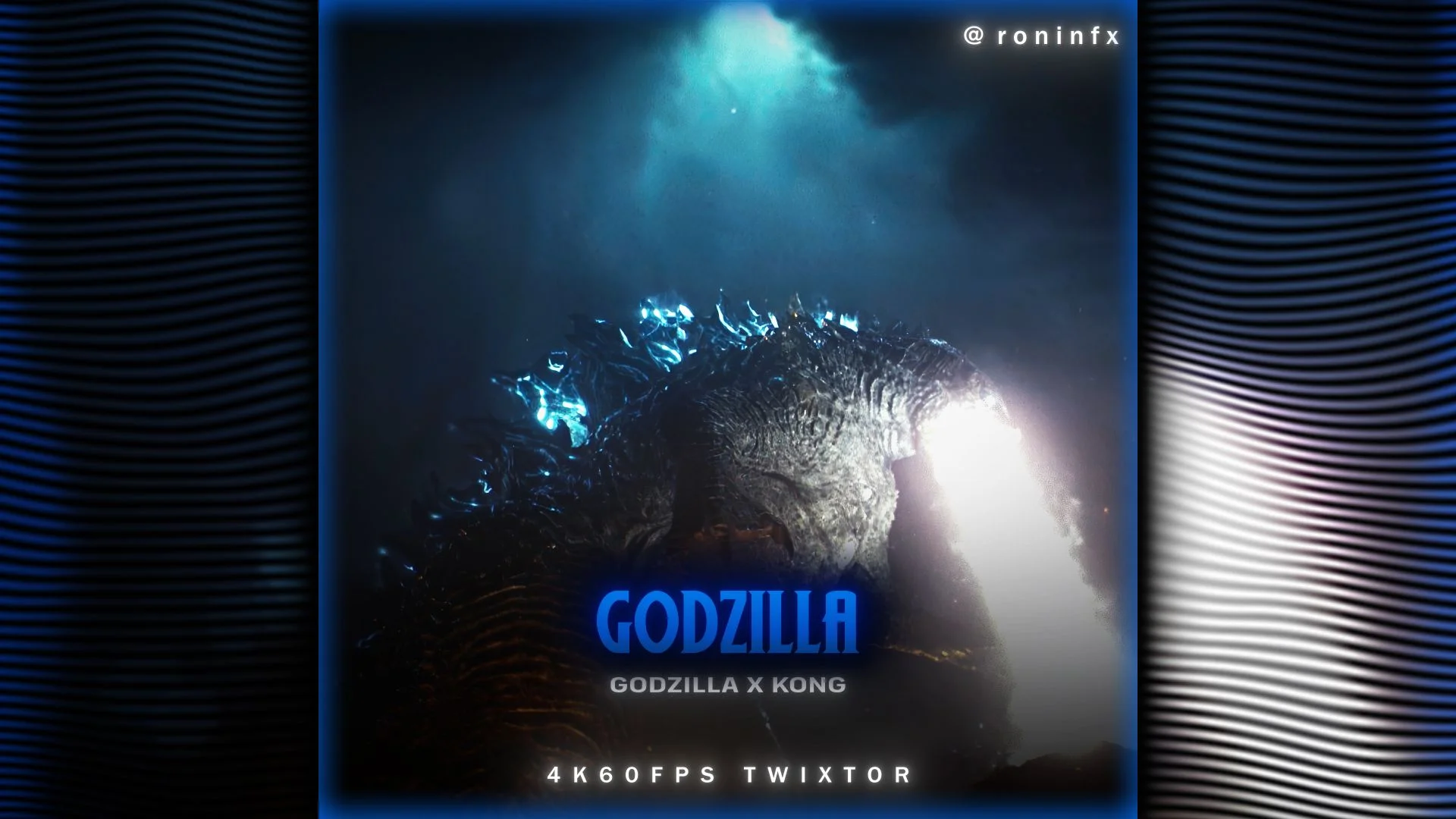
GODZILLA | THE NEW EMPIRE | 4K60FPS TWIXTOR | FREE CLIPS (NO CC)
Don’t forget to like and subscribe @roninfx on youtube for more scene packs like this!
Give credits to @roninfx_ or @roninfx7 on any platform.
GODZILLA
Godzilla, one of the most iconic and enduring figures in cinematic history, has captivated audiences worldwide for decades. Originating from Japan, this colossal, radioactive monster has become a cultural phenomenon, symbolizing various aspects of human society, from the horrors of nuclear war to the resilience of nature. Here's an in-depth exploration of Godzilla's origins, evolution, cultural impact, and symbolism.
Godzilla, or "Gojira" in Japanese, made his first appearance in the 1954 film *Godzilla* produced by Toho Company Ltd. The film was directed by Ishirō Honda and produced by Tomoyuki Tanaka. The character was conceived in the aftermath of World War II, during a period when Japan was grappling with the devastating effects of nuclear bombings on Hiroshima and Nagasaki, as well as the hydrogen bomb test on Bikini Atoll. These events profoundly influenced the creation of Godzilla, making him a metaphor for nuclear destruction.
The original *Godzilla* film is a dark, somber reflection on the dangers of nuclear energy and the destruction it can unleash. Godzilla emerges from the ocean, awakened and mutated by nuclear radiation, to wreak havoc on Tokyo. The film’s themes resonate deeply with the Japanese experience of war and nuclear devastation, portraying Godzilla as both a symbol of nature's wrath and a cautionary tale about human hubris.
Over the years, Godzilla has undergone significant transformations, both in terms of appearance and characterization. In the 1954 film, Godzilla is depicted as a terrifying force of nature, an almost unstoppable creature that brings death and destruction. The suitmation technique, which involves an actor in a rubber suit performing on miniature sets, was employed to bring Godzilla to life. This method, though primitive by today’s standards, became a hallmark of the franchise.
As the series progressed, particularly during the Showa era (1954-1975), Godzilla’s role shifted from that of a villain to a more heroic figure. Films like *Ghidorah, the Three-Headed Monster* (1964) and *Godzilla vs. Mechagodzilla* (1974) portrayed Godzilla as a defender of Earth, battling other monstrous threats. This period saw Godzilla become a more child-friendly character, reflecting a lighter tone in the films.
The Heisei era (1984-1995) brought a return to Godzilla’s darker roots, with a focus on more serious themes and a continuity that connected the films more cohesively. Godzilla’s design was updated to be more menacing and powerful, with enhanced special effects. This period also delved deeper into Godzilla’s origin and abilities, presenting him as a more complex and tragic figure.
The Millennium era (1999-2004) featured standalone films that reimagined Godzilla’s character and story. Each film offered a different interpretation, exploring various aspects of the monster’s mythology and emphasizing high-quality special effects.
The most recent Reiwa era (2016-present) and the American adaptations by Legendary Pictures have continued to evolve Godzilla’s character, incorporating cutting-edge CGI and storytelling techniques. Films like *Shin Godzilla* (2016) and the MonsterVerse series (*Godzilla* (2014), *Godzilla: King of the Monsters* (2019), and *Godzilla vs. Kong* (2021)) have presented Godzilla with a blend of traditional and contemporary elements, keeping the character relevant in modern cinema.
Godzilla's influence extends far beyond the realm of film. The character has become a global icon, recognized and beloved by audiences worldwide. Godzilla has appeared in various media, including television shows, comics, video games, and novels. The franchise has spawned an extensive merchandise empire, ranging from toys and clothing to collectibles and theme park attractions.
In Japan, Godzilla holds a special place in popular culture. The monster is often seen as a national symbol, representing Japan’s resilience and ability to overcome adversity. Godzilla has been honored with a star on the Hollywood Walk of Fame and even appointed as an official tourism ambassador for Tokyo’s Shinjuku ward.
Internationally, Godzilla has inspired numerous films and series, influencing the genre of kaiju (giant monster) films. Hollywood adaptations have introduced Godzilla to new generations, cementing his status as a timeless character. The cross-cultural appeal of Godzilla speaks to the universal themes he embodies, such as humanity's relationship with nature and the consequences of technological advancement.
Godzilla’s enduring popularity can be attributed to the rich symbolism and themes that the character embodies. At its core, Godzilla is a metaphor for the destructive power of nuclear weapons. The monster’s origins, linked to nuclear radiation, serve as a stark reminder of the potential for human-induced catastrophe. The original film’s harrowing depiction of Tokyo’s destruction evokes the real-life horrors of the atomic bombings, making Godzilla a poignant symbol of anti-nuclear sentiment.
Beyond nuclear themes, Godzilla also represents broader environmental concerns. The monster’s destructive rampages can be seen as nature’s revenge against human exploitation and environmental degradation. This interpretation has become more prominent in recent films, reflecting growing awareness of ecological issues.
Godzilla’s role as a protector in later films adds another layer of complexity to the character. This duality—being both a destroyer and a savior—mirrors the ambivalent relationship humans have with nature. While nature can be nurturing and life-sustaining, it can also be unforgiving and destructive. Godzilla embodies this dual nature, challenging viewers to consider their impact on the environment.
Godzilla's legacy is a testament to the character's adaptability and the profound themes he represents. From a symbol of nuclear horror to a pop culture icon, Godzilla has evolved with the times while retaining the core elements that make him compelling. The monster's journey through cinema reflects broader societal concerns, making Godzilla not just a creature of fiction, but a mirror to our own world. As long as these themes remain relevant, Godzilla will continue to roar on screens, captivating and provoking audiences for generations to come
Movies4K60fps5mo ago